
AI Writing Assistant for Marketers with Anyword
Marketing teams often publish ad copy without knowing which version converts until spend is already gone. Anyword is a copy-generation and scoring workspace, a AI Writing Assistants tool, that drafts marketing text and predicts its performance before publication. Particularly strong at predictive copy scoring — not built as a full content-operations or publishing system.
- United States 27%
- India 6.5%
- Vietnam 6.2%
- Italy 3.6%
- Other 56.7%
What Anyword Does
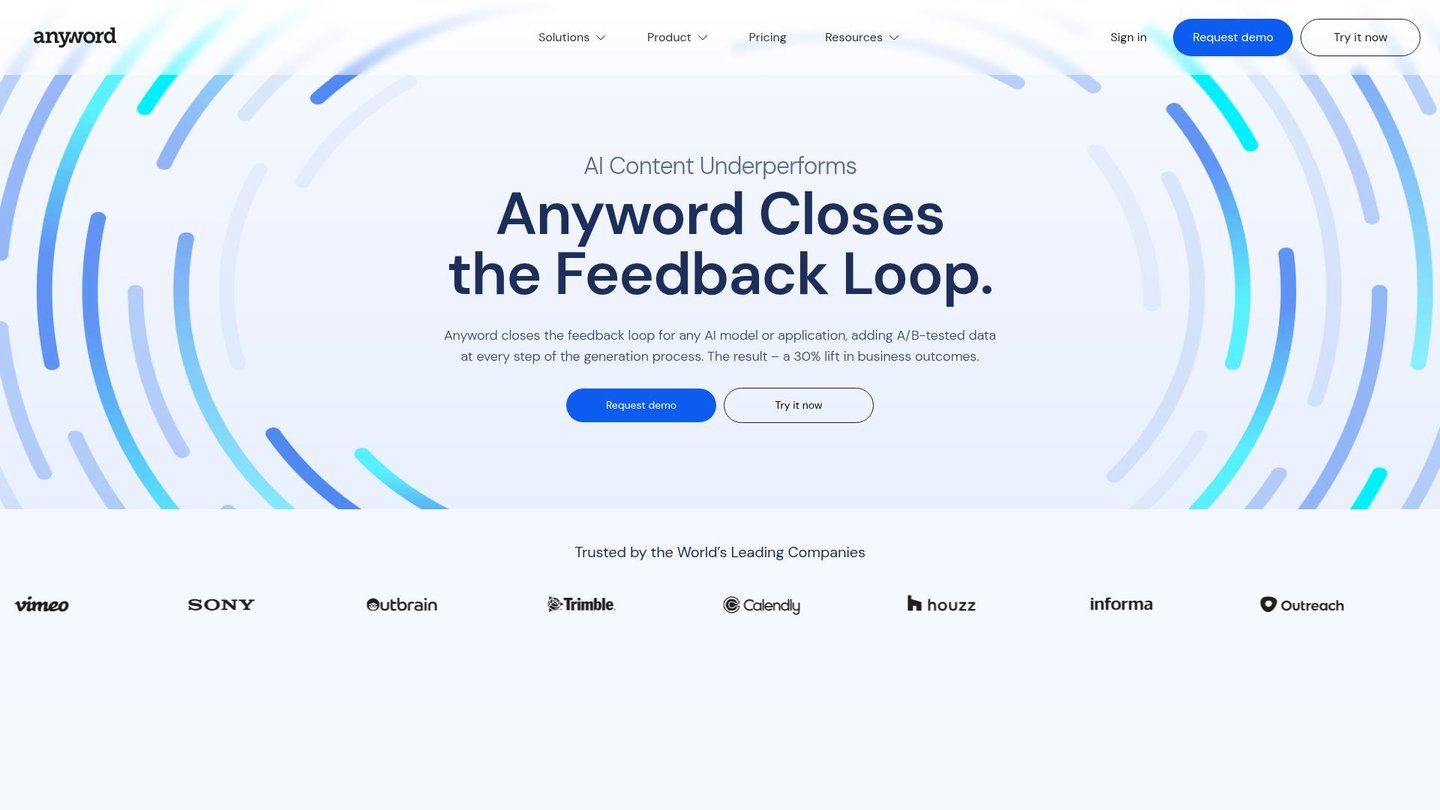
Anyword scores and rewrites marketing copy against historical performance data before it goes live, cutting the guesswork on which version to publish.
Anyword generates ads, emails, social posts, blog sections, and website copy, then runs each draft through a performance-prediction model to flag the strongest version across channels. Brand voice settings, messaging banks, and target-audience profiles keep generated drafts aligned with existing campaigns instead of producing generic output. Higher-tier plans connect live marketing channels so the model learns from a brand’s published history instead of relying on generic training data alone.
Main Features
AI Content Performance
Anyword generates copy variants for ads, emails, and social posts, then ranks each one using its own performance-prediction model rather than leaving the choice to guesswork. The model draws on patterns from previously published marketing copy, so a marketer can compare several headline options side by side before committing media budget to a single version.
Predictive Performance Scoring
Every piece of generated or pasted copy receives a performance score from Anyword before publication, flagging which draft is likely to underperform. The Starter plan includes 50 performance predictions per month and Data-Driven includes 100, both capped allowances that reset each billing cycle rather than rolling over. Teams running frequent multivariate tests will exhaust a lower tier’s allowance quickly, pushing them toward a higher plan.
Blog Wizard
The Blog Wizard drafts long-form posts section by section and runs a built-in plagiarism check before export, so a draft can be screened for originality without a separate tool. It pairs research prompts with the same performance-prediction engine used for shorter copy, scoring headlines and intros alongside ad variants rather than treating blog content as a separate workflow.
Enterprise Security & Compliance
Anyword states it meets SOC 2, ISO 27001, GDPR, and HIPAA requirements, and the Enterprise plan adds single sign-on, multi-factor authentication, and a private large language model that keeps brand data out of third-party model training. This set of controls matters for teams handling regulated or customer-identifiable messaging data, though Anyword does not publish third-party audit reports confirming these certifications.
Use Cases
-
Text Summarizer
Marketers facing long source material use Anyword’s text summarizer to produce short snippets in a few clicks. It applies the same brand-voice settings used elsewhere in the platform, so summaries stay on-message instead of reading like generic extracts.
-
LinkedIn Post Generator
Marketers building a professional social presence use Anyword’s LinkedIn Post Generator to draft converting post copy from a short brief. Generated drafts can be run through performance prediction before posting, which narrows the choice to the highest-scoring variant.
-
Email Marketing Optimization
Email marketing teams connect historical open- and click-rate data so Anyword can optimize subject lines and body copy against what has actually performed before. The vendor states this results in improved engagement rates for subsequent sends.
Best For / Not For
Anyword is built for people who need marketing copy backed by performance data rather than a single draft.
Marketers producing ads, social posts, and blog content, and Email marketing teams optimizing subject lines against historical open and click data, get the most direct use of the scoring engine.
Anyword lists no free plan on its pricing page, and lower tiers cap performance predictions at 50-100 per month, so teams running high-volume multivariate testing will exhaust that allowance before a campaign cycle ends.
Pricing
Anyword’s Starter plan costs $39 per user per month when billed annually, and the Data-Driven plan costs $79 per user per month billed annually, both including 100 generations per month and a 7-day free trial.
| Plan | Price | Included |
|---|---|---|
| Starter | $39 / user/month, billed annually | 100 generations/month |
| Data-Driven | $79 / user/month, billed annually | 100 generations/month |
Monthly billing costs more than the annual rate shown here, and the Business and Enterprise tiers use custom pricing that is not published on Anyword’s site. Anyword does not list a permanent free plan, so the Starter tier is the lowest paid entry point available. Starter includes one seat while Data-Driven includes three seats, with additional seats billed at $59 per month or $49 per month on the annual plan, up to a maximum of ten seats.
Pricing checked 2026-10-25.
Quick Comparison
ProWritingAid is Anyword’s main alternative for grammar and style editing of long-form writing. ProWritingAid runs deep grammar, style, and readability checks built for editing manuscripts and reports. Anyword instead scores copy for predicted marketing performance, a function ProWritingAid does not offer. Choose ProWritingAid if the job is polishing long-form writing for grammar and readability. Choose Anyword if the job is generating and scoring short-form marketing copy before it goes live.
Verdict
Anyword generates and scores marketing copy with 100 monthly generations on its $39-per-user Starter plan, scaling to custom Enterprise pricing with private-model support. It fits marketers and email teams optimizing copy against historical performance data rather than those needing long-form editing or full content-operations tooling.


