
Clerk.io for E-commerce Merchandising Teams: AI Search and Recommendations
Most E-Commerce tools handle one job; Clerk.io runs search, recommendations, chat, audience segmentation and email from one shared dataset. Merchandising teams get one integration instead of five, so Clerk.io fits stores consolidating tools. Built for multi-module personalization — stores needing only developer-grade search will hit its ceiling.
- Denmark 20.9%
- United States 8.9%
- Italy 7%
- India 5.2%
- Other 58%
What Clerk.io Does
Clerk.io connects product discovery, upselling and win-back messaging to one shared catalog and behavior dataset for e-commerce merchandising and marketing teams.
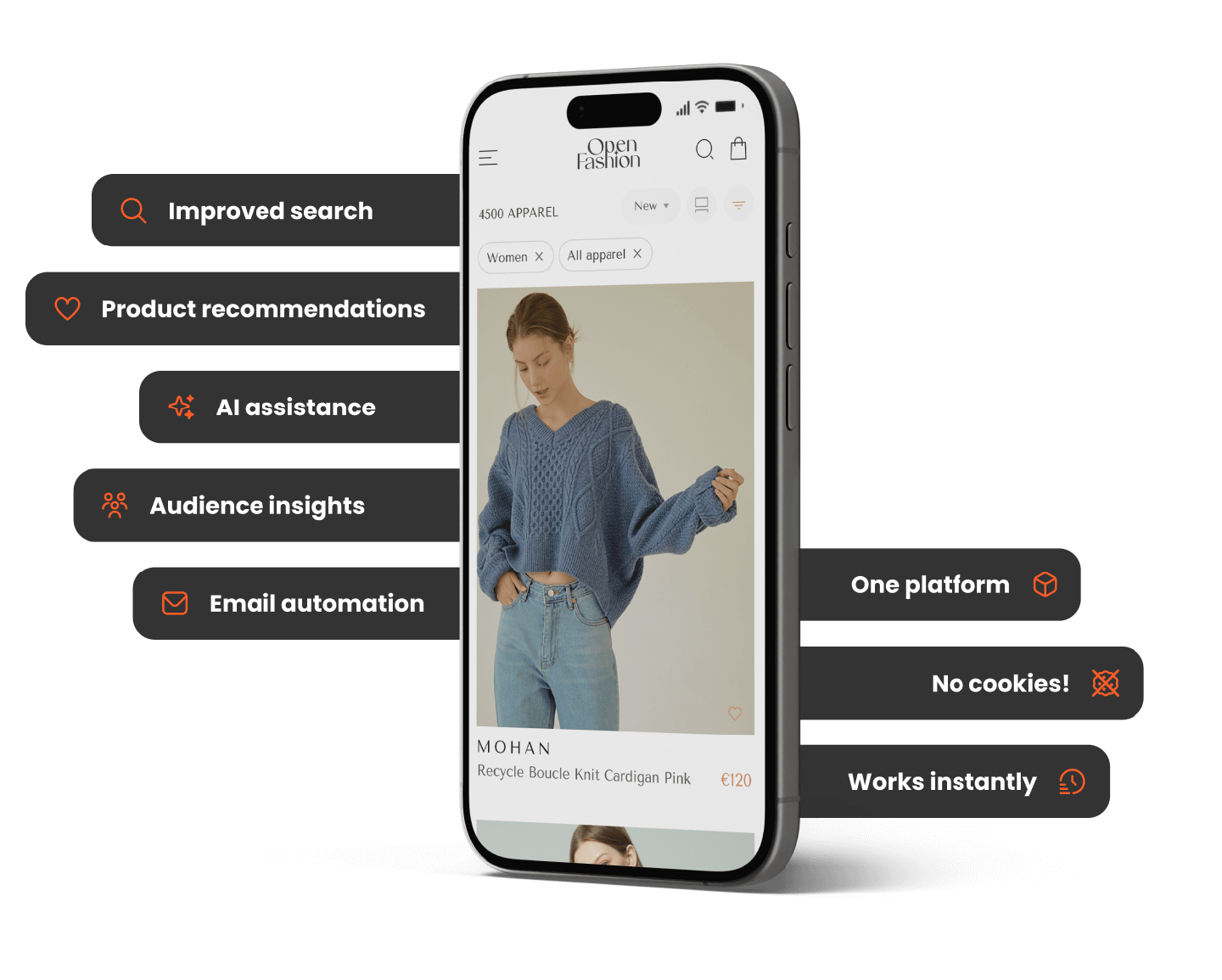
Clerk.io reads a store’s catalog, sales history and shopper behavior, then applies that data across five modules: Search corrects typos and ranks by intent, Recommendations surfaces complements at checkout-relevant moments, Chat answers product questions, and Audience plus Email re-engage past visitors with behavior-based campaigns. Because every module shares the same data, a merchandiser does not sync catalogs across separate tools.
Clerk.io’s integrations cover Shopify, WooCommerce, Magento, BigCommerce, Shopware, PrestaShop, Lightspeed, VTEX and JTL, plus open API for custom platforms.

Main Features
Search
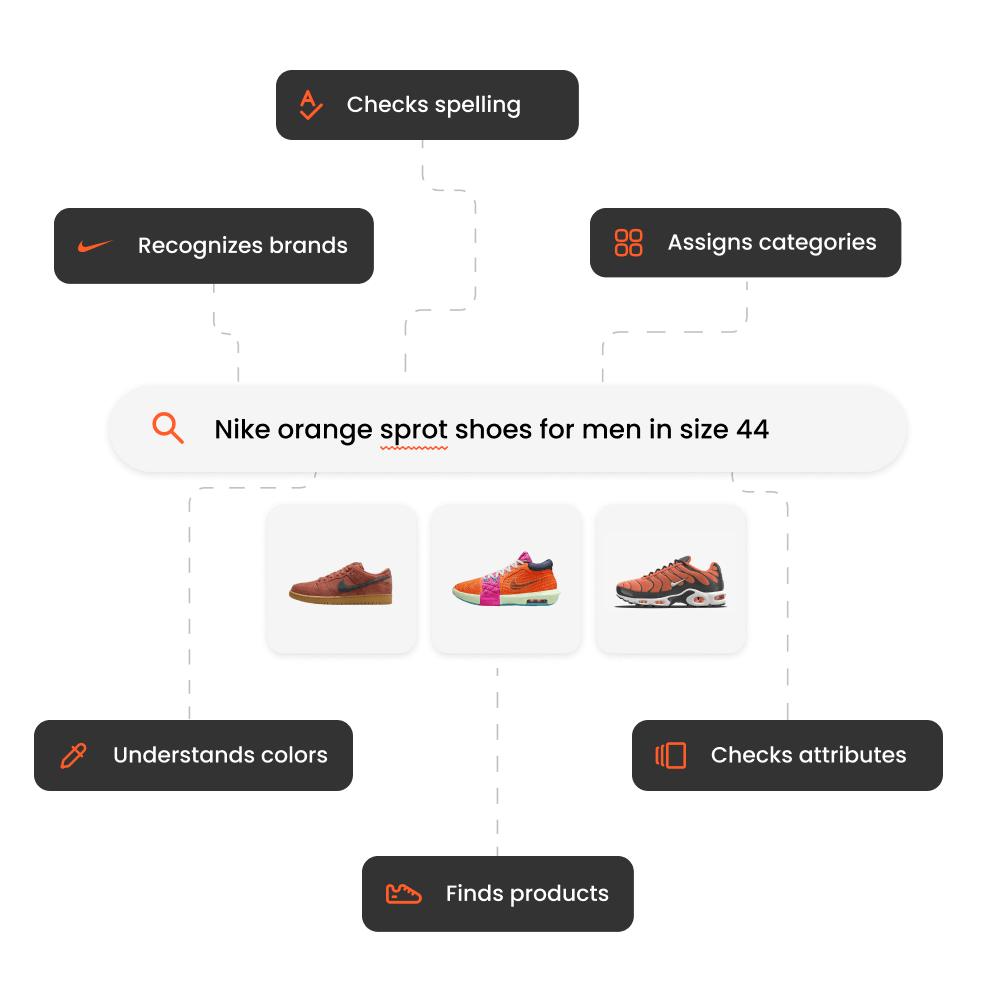
Clerk Search parses shopper intent, typos, behavior signals, sales history and stock availability to rank results rather than matching keywords alone. It runs on the connected catalog feed from the store’s platform. Because ranking factors in live availability and sales data, shoppers see in-stock, relevant products instead of generic keyword matches, which keeps more visits moving toward checkout.
Recommendations
Recommendations pulls shopper and basket context to surface complements, alternatives and next-product suggestions at points where they can still influence the order, such as product pages and cart. It reads the same catalog and behavior data as Search. Because suggestions are context-specific rather than static bestseller lists, they appear where a shopper is already deciding, which can grow basket size.
Audience & Email
Audience builds behavioral and purchase-intent segments that can be activated across Email, Meta and Google, while Email sends personalized product messages — including abandonment follow-ups — selected automatically from shopper history. Both modules share Clerk.io’s catalog and behavior data with Search and Recommendations. Because segments and emails pull from existing behavior data, teams reach past shoppers without buying new cold traffic.
Platform Integrations
Clerk.io offers out-of-the-box connections for Shopify, WooCommerce, Magento, BigCommerce, Shopware, PrestaShop, Lightspeed, VTEX, JTL, Dynamicweb and several other platforms, plus an open API for custom stacks. Each integration feeds the same product and order data into all five modules. Because the connection is made once, adding Chat or Audience later does not require a separate data sync.
Use Cases
-
E-commerce merchandising team
A merchandising team managing a large catalog uses Clerk.io’s Search and Recommendations to handle vague queries, typos and zero-result searches, then surface cross-sells at checkout-relevant moments, which supports larger basket sizes.
-
E-commerce marketing team
A marketing team with thousands of subscribers uses Clerk.io’s Audience module to build behavioral segments and Email to trigger personalized cart- and search-abandonment campaigns, which reactivates past visitors without new ad spend.
-
Multi-channel retail team
A team running Shopify, Magento, PrestaShop or another supported platform connects Clerk.io once via a pre-built integration or open API, so Search, Recommendations, Chat, Audience and Email all draw on the same catalog data.
Best For / Not For
Clerk.io is built for online stores that want search, recommendations, chat, audience segmentation and email working from one connected dataset instead of separate point tools. It fits an E-commerce merchandising team managing a large product catalog and an E-commerce marketing team running retention campaigns against existing subscriber lists. Clerk.io’s pricing scales with usage across searches, recommendations, conversations, emails and subscribers independently, so a store running all five modules at high volume faces a less predictable bill than a flat-rate tool, which rules it out for teams wanting one fixed monthly cost.
Pricing
Each Clerk.io module — Search, Recommendations, Chat, Audience and Email — starts at $0 per month for its lowest usage tier, then scales through paid usage brackets up to custom quotes at the highest volumes.
| Plan | Price | Included |
|---|---|---|
| Search | Free | No Search, 10.000 to 2.500.000 monthly searches |
| Recommendations | Free | No Recommendations, 100.000 to 10.000.000 monthly recommendations |
| Chat | Free | No Chat, 100 to 25.000 monthly conversations |
| Free | No Email, 10.000 to 2.500.000 monthly opened emails | |
| Audience | Free | No Audience, 10.000 to 2.500.000 monthly active subscribers |
Exceeding a tier’s usage over a three-month average triggers an automatic upgrade or additional invoicing per Clerk.io’s Terms of Service, and pricing above the top listed tier requires a custom quote.
Pricing checked 2026-10-26.
Quick Comparison
Bloomreach is Clerk.io’s main alternative for catalog-wide personalization and search infrastructure. Bloomreach offers broader content-and-commerce CMS tooling built for larger engineering teams managing custom data pipelines. Clerk.io bundles Search, Recommendations, Chat, Audience and Email behind one store integration with no separate CMS layer to maintain. Choose Bloomreach if the team has engineering resources for a custom content-commerce stack. Choose Clerk.io if the goal is one connected setup across search, upsell and retention without building that stack in-house.
Verdict
Clerk.io runs five modules — Search, Recommendations, Chat, Audience and Email — from one store integration, with Search scaling free up to 2.5 million monthly searches before paid tiers apply. It suits merchandising and marketing teams consolidating tools rather than those needing one specialized, developer-grade search engine.