
AI Quiz Builder for Ecommerce Brands with Octane AI
Most E-Commerce tools require manual quiz-logic setup; Octane AI builds questions, images, and results pages from a spreadsheet instead. Ecommerce brands get a working draft in hours, fitting early quiz creation over ongoing onsite merchandising. Built for Shopify catalogs with detailed product data — stores outside Shopify will find it unsuitable.
- United States 77.4%
- United Kingdom 5.4%
- Canada 5.2%
- Netherlands 3.5%
- Other 8.4%
What Octane AI Does
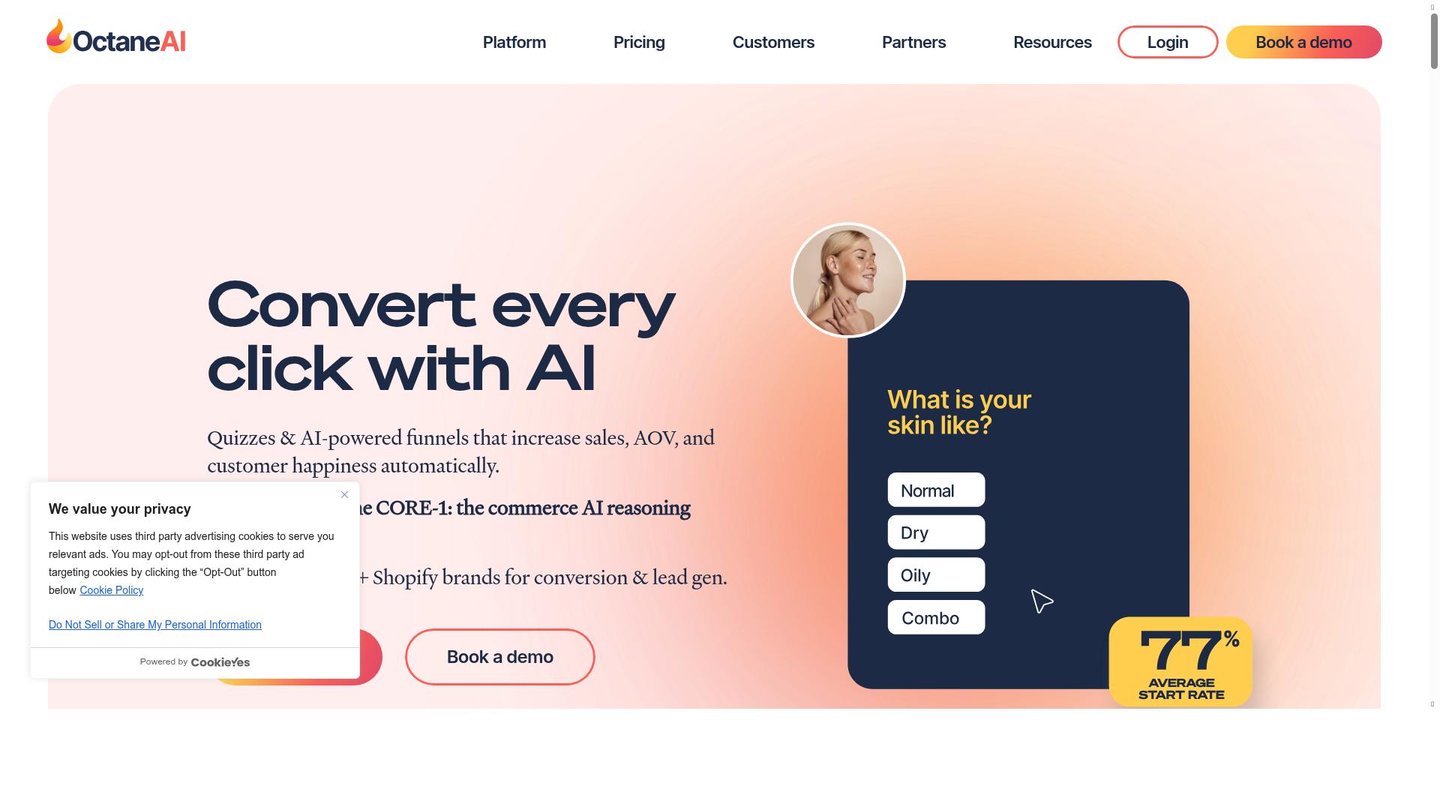
Ecommerce brands use Octane AI to turn a spreadsheet, document, or short brief into a working quiz with questions, images, a product matrix, and results pages.
Phoenix, Octane AI’s quiz engine, reads that input, drafts logic matched to the merchant’s catalog, and flags paths that lead to out-of-stock or unsuitable recommendations before the quiz goes live. Shoppers answer questions or upload a photo, and Octane AI maps responses to specific products rather than a generic category page, so matching happens at the SKU level, then tracks revenue, drop-off, and conversion by answer and product.

Main Features
Describe It, and AI Builds It
Merchants share a spreadsheet, document, or single sentence describing their product line, and Octane AI’s Phoenix engine drafts a working quiz with questions, images, a product matrix, and results pages. Octane AI states this first draft arrives in hours, not weeks, then lets merchants edit the logic directly instead of starting from a blank form.
On-Brand Design Without Developers
Octane AI matches a quiz’s colors, fonts, and layout to the merchant’s existing site, and generates missing images automatically rather than requiring a design team. Group edits apply across the whole quiz at once, so changing a color or image updates every question and results page together. This removes the back-and-forth with developers that custom quiz builds usually require.
AI Issues Finder
Octane AI’s Phoenix engine walks every path a shopper could take through a quiz and flags broken logic, missing products, or out-of-stock items before shoppers find them. Phoenix has caught cases where a specific product, such as a ceramide cream, is never recommended on a relevant results page. Merchants fix each flagged issue by accepting a suggested change instead of rebuilding logic manually.
Integrations
Octane AI syncs quiz answers with Klaviyo, Zapier, Alloy, Facebook Meta Pixel, Google Analytics events, and Postscript, so quiz data flows into existing email, SMS, and ad workflows. Klaviyo and Shopify sync ship on every plan, while A/B testing and enhanced integrations unlock on Plus and Enterprise. Merchants avoid building a separate data pipeline to turn quiz answers into marketing segments.
Use Cases
-
Education-First Quiz
Ecommerce brands use Octane AI to build quizzes that guide and educate shoppers before they buy, instead of showing a plain product list. Phoenix drafts the questions and results pages directly from the catalog.
-
Quiz-Driven Strategy
Marketing teams implement quiz-driven strategies with Octane AI to increase engagement and conversion. Quiz answers sync to Klaviyo and other named platforms, so teams segment shoppers by quiz response instead of generic email lists.
-
Personalized Recommendations
Retailers use Octane AI quizzes to give customers personalized product recommendations instead of a static catalog search. Shoppers answer questions or upload a photo, and Octane AI maps responses to specific SKUs, then tracks which answers drive revenue.
Best For / Not For
Octane AI is built for merchants who sell consultative products and want a guided-selling layer on top of their Shopify catalog. Ecommerce brands use it for education-first quizzes, marketing teams use it to drive quiz-driven engagement strategies, and retailers use it to generate personalized recommendations tied to specific SKUs. Octane AI limits free-standing use outside Shopify, and its credit-based pricing means stores running high quiz volume or heavy AI features such as Smart Products and Image Analyzer can hit overage charges, so budget-constrained teams outside Shopify should look elsewhere.
Pricing
Octane AI charges per plan tier with annual billing: Basic costs $510 per year, Plus costs $2040 per year, and Enterprise & Unlimited starts at $5100 per year, with a free 14-day trial on every tier.
| Plan | Price | Included |
|---|---|---|
| Free Trial | Free | Full feature access for 14 days |
| Octane AI Basic | $510 / year, billed annually | 400 credits included, Limited to two quizzes |
| Octane AI Plus | $2040 / year, billed annually | 2,200 credits included, Unlimited quizzes |
| Octane AI Enterprise & Unlimited | $5100 / year, billed annually | 7,250+ credits or unlimited |
Credits that run out mid-cycle incur overage billing, or merchants can upgrade mid-month with prorated billing instead.
Pricing checked 2026-10-26.
Quick Comparison
Rebuy is Octane AI’s main alternative for onsite merchandising and post-purchase upsells. Rebuy builds cart and checkout recommendations, cross-sells, and post-purchase offer widgets across the storefront. Octane AI instead walks every quiz path with its AI issues finder and ties quiz answers to Klaviyo segments for follow-up marketing. Choose Rebuy if the priority is cart and checkout upsells. Choose Octane AI if the goal is a guided quiz that captures zero-party data before purchase.
Verdict
Octane AI builds a working quiz with questions, images, and results pages from a spreadsheet in hours, and prices start at $510 per year for 400 credits and two quizzes. It fits Shopify brands running guided-selling quizzes, not general onsite merchandising.


