
Squibler: AI Creative Writing for Authors
Which tool drafts a full manuscript without outlining every chapter by hand? Squibler, a Creative Writing tool, generates full-length books and screenplays from a title and premise for authors, screenwriters, and writers building story structure. Screenwriters needing granular scene-by-scene story-bible control should consider Novelcrafter instead, since Squibler focuses on end-to-end manuscript generation rather than detailed continuity tracking.
- United States 31.7%
- United Kingdom 9.2%
- Brazil 5.5%
- Singapore 5%
- Other 48.6%
What Squibler Does
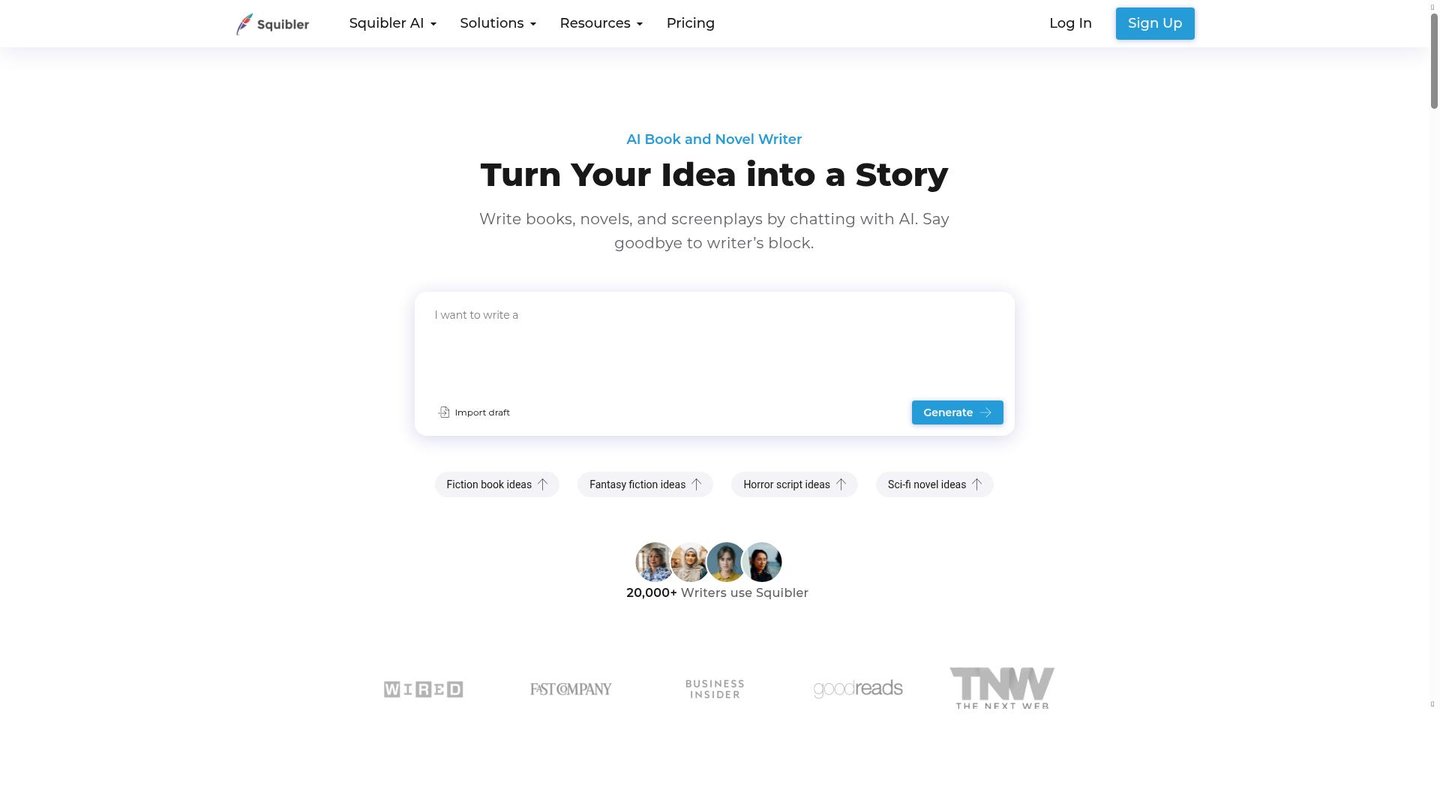
Squibler turns a title and short premise into a structured draft manuscript or screenplay without requiring a chapter outline first. It builds story outlines, populates Elements such as characters and settings, then expands those into full chapters or formatted scenes through its Smart Writer AI, which reviews existing text and proposes revisions. Squibler also generates images or short video sequences from written scenes, so authors get visual references alongside prose. The output still needs editing: Source material notes that AI-generated drafts may require substantial human work on originality, voice, pacing, and continuity before publication.
Main Features
Full-Length Book Generation
Squibler generates a complete book draft organized into chapters and scenes from a title and premise. It expands the outline section by section using the credits allocated to the active plan. Because the Free plan caps credits at 1,000 per month, generating a full 200-300 page manuscript typically requires a paid tier.
Screenplay Generation
Squibler produces screenplay drafts with formatted scenes and dialogue following standard script conventions. It applies the same Elements data used for books, so characters and settings stay consistent across a project. Screenwriters get a formatted first draft without manually applying industry page layout rules.
Story Outline Generation
Squibler generates detailed outlines mapping plot structure and pacing before any chapter is drafted. The outline feeds directly into the book and screenplay generators, so later scenes follow a consistent arc instead of drifting from the original premise. Writers can edit the outline before full-length generation runs.
Smart Writer AI
Smart Writer AI analyzes selected passages and proposes rewrites for pacing, dialogue, or clarity. It works on existing text rather than generating from scratch, so it functions as an editing layer on top of drafts Squibler already produced. Revisions still require the author to accept or reject each suggestion.
Use Cases
-
Novel Writing
Authors working on a single manuscript use Squibler’s full-length book generation alongside Elements to keep characters and settings consistent across chapters. Story Outline Generation sets the structure first, so the draft follows a planned arc rather than improvising chapter to chapter.
-
Screenplay Writing
Screenwriters use Squibler to create complete screenplay drafts with proper formatting, applying Screenplay Generation to produce scenes and dialogue in standard script layout. Smart Writer AI then revises specific scenes, so formatting work does not have to be redone by hand later.
-
Story Structuring
Writers who need a narrative foundation before drafting use Squibler’s Story Outline Generation to map plot progression and pacing. The resulting outline can be edited and then expanded into full chapters or scenes, so structural changes happen before, not after, full-length generation.
Best For / Not For
Squibler is built for people drafting long-form fiction or scripts who want a generated starting manuscript rather than a blank page, and who are comfortable editing AI output afterward.
Authors producing a single novel-length project, screenwriters drafting a feature-length script, and writers who want a structured outline before expanding chapters are the core audience. These personas benefit most from the Plus and Pro tiers, where credit limits stop blocking a full manuscript partway through generation.
Squibler is not built for teams needing a detailed, scene-by-scene story bible or granular continuity tracking across a long series; those users are better served by a tool with dedicated codex-style organization. Squibler also publishes no integration list, so writers relying on external publishing or editing software should confirm compatibility before committing to a paid plan.
Pricing
Squibler offers a Free plan with 1,000 AI credits per month, while the standard Plus plan runs $15.83 per user/month billed annually, and Pro runs $49.17 per user/month billed annually with unlimited credits.
| Plan | Price | Included |
|---|---|---|
| Free | Free | 1,000 AI credits/month |
| Plus | $15.83 / user/month, billed annually | 10,000 AI credits/month |
| Pro | $49.17 / user/month, billed annually | Unlimited AI credits |
Monthly billing on Plus and Pro runs higher, at $29.99 and $89.99 respectively, instead of the discounted annual rates shown above. Credits reset each month and do not roll over, so unused allocation on the Free or Plus tier is lost, and a writer generating a long manuscript mid-month on Free may run out of credits before finishing a draft.
Pricing checked 2026-10-26.
Quick Comparison
Novelcrafter is Squibler’s main alternative for authors who need tight continuity tracking across a long series. Novelcrafter links every character, location, and lore entry to a Codex the AI checks before generating or reviewing text. Squibler instead generates a complete 200-300 page manuscript in one automated pass through Full-Length Book Generation. Choose Novelcrafter if you are managing a multi-book series with heavy continuity needs. Choose Squibler if you want a full first draft generated end-to-end from a single premise.
Verdict
Squibler generates a full 200-300 page manuscript or screenplay for authors and screenwriters starting at $15.83 per user/month billed annually on Plus. It fits writers who want an automated first draft over granular scene-by-scene tools. Editing time for originality and continuity should be budgeted separately.