
mnml.ai: AI Architecture Rendering Made Simple
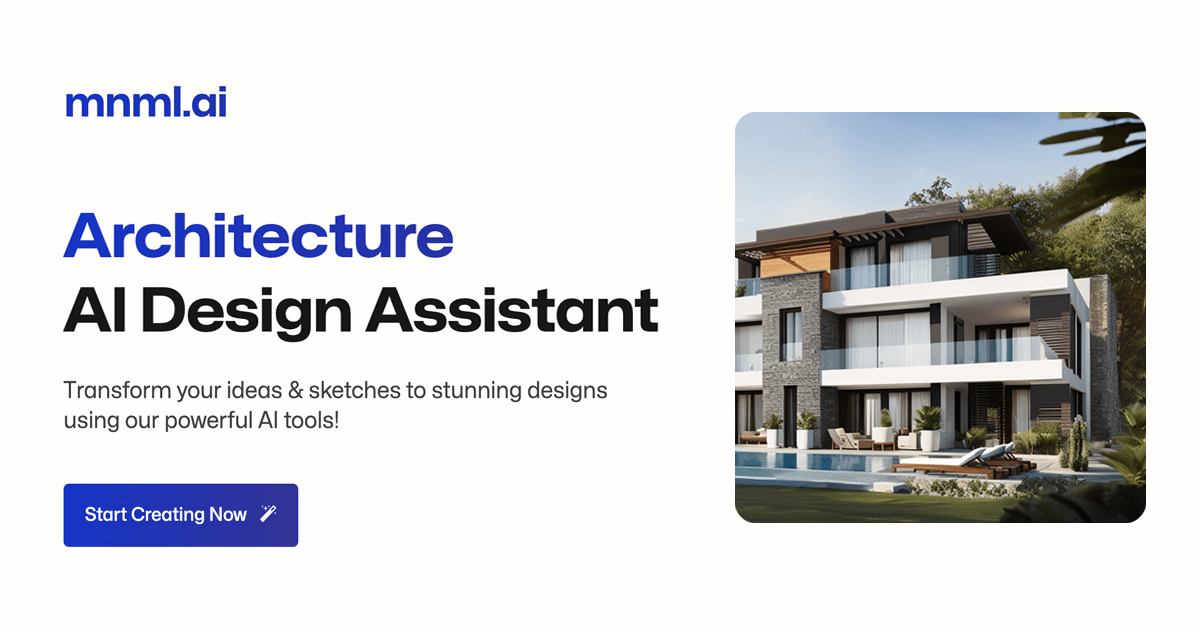
mnml.ai is an AI architecture rendering tool that converts rough sketches and 3D models into polished visuals in seconds. For example, an architect can upload a SketchUp massing model and instantly generate a photorealistic exterior render for a client meeting. In particular, interior designers use mnml.ai to test multiple styles for the same room without manual re-rendering, saving hours on every project.
About mnml.ai
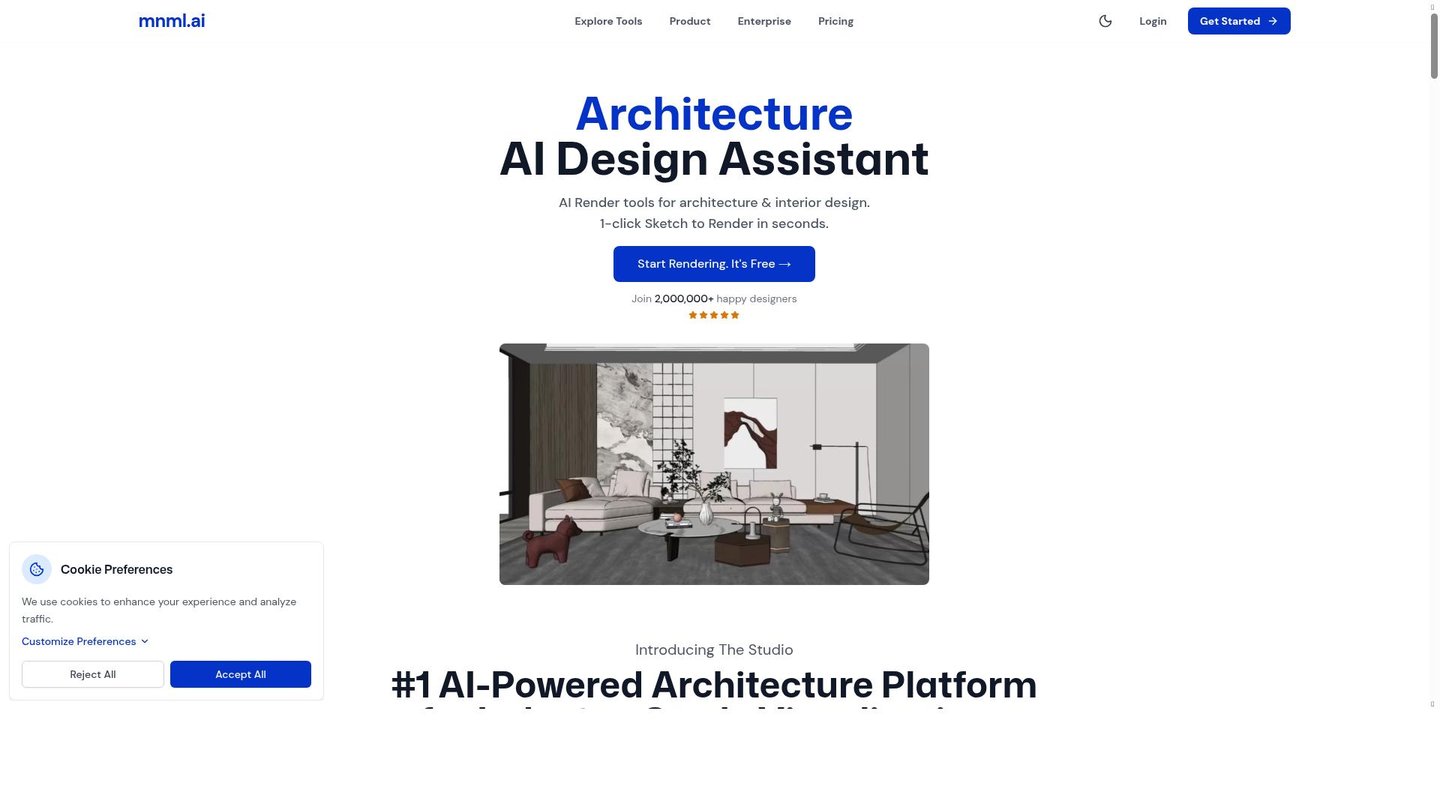
As a result, mnml.ai has become a go-to platform for architects, interior designers, and visualization specialists who need fast, reliable AI rendering. It transforms hand-drawn sketches, CAD wireframes, or models from tools like SketchUp, Blender, Revit, and 3ds Max into high-quality images in one click. Instead of waiting hours for traditional rendering, users see concept-ready visuals in seconds.
Moreover, mnml.ai solves the bottleneck of slow visualization during early design stages. Architects can rapidly explore exterior massing options, while interior designers experiment with materials, lighting, and furniture layouts without deep rendering skills. Educators also use it as a digital storytelling tool in studio courses, helping students visualize concepts from simple drawings.
In practice, common workflows include sketch-to-render for quick client pitches and AI-enhanced renders for competition boards. For example, a residential architect might import a basic Revit model, apply Landscape AI to redesign the garden, then use Render Enhancer to upscale the final image. Meanwhile, a hospitality designer can rely on Imagine AI, the text-to-render module, to generate lobby concepts from short prompts, then refine them using style transfer and inpainting.
Features of mnml.ai
Consequently, the feature set of mnml.ai focuses on streamlining visualization from idea to presentation.
- One-Click Sketch to Render: Instantly turns hand sketches or CAD outlines into detailed visuals, making AI content creation fast for architects who need quick concept validation.
- Text-to-Render Imagine AI: Generates architectural scenes from short text prompts, acting as an AI video maker–style ideation tool for early-stage design exploration.
- Exterior AI Rendering: Produces exterior shots from SketchUp, Blender, or Revit models, giving a powerful video generation platform–like pipeline for client-ready visuals.
- Interior AI Styles: Applies more than 20 interior styles to the same space, enabling automated animation-ready mood boards and rapid style comparison for clients.
- Render Enhancer and Upscaling: Enhances existing renders and upscales them to high resolution, preserving detail for marketing images and competition entries.
- Landscape and Masterplan AI: Reimagines gardens, backyards, and 2D masterplans, helping urban designers and landscape architects present options with minimal manual modeling.
- Style Transfer and Inpainting Canvas: Transfers visual styles from references and edits specific regions, supporting precise tweaks without reopening heavy 3D scenes.
- Video AI Animations: Converts static designs into short 1080p clips with one click, offering automated animation for cinematic walkthrough teasers.
Additionally, mnml.ai provides flexible options that fit different team sizes and workflows. The platform typically includes free credits so new users can test sketch-to-render, text-to-image, and enhancement tools before upgrading. Furthermore, subscription plans and credit-based pricing tiers let studios scale usage for busy periods without overcommitting. Through its architecture-focused API, mnml.ai can integrate into custom pipelines, for example connecting a firm’s internal design portal to automated rendering endpoints. As a result, both solo practitioners and large offices can standardize AI-assisted visualization while keeping their existing design stack intact.
Ultimately, mnml.ai stands out as a focused AI architecture rendering and digital storytelling tool that compresses the entire visualization cycle into minutes. Because it supports sketch-to-image, text-to-render, enhancement, and short animations in one place, design teams can iterate more, present better options, and win work with sharper visuals. In turn, this AI content creation and video generation platform helps transform conceptual ideas into compelling architectural narratives at unprecedented speed.


