
Hermes Agent: One Assistant Across Every Device You Own | Features, Pricing & Alternatives
- United States 19.7%
- China 19.7%
- India 5.2%
- Indonesia 5.1%
- Other 50.4%
Introduction
Switching between a coding assistant in your terminal, a chatbot on Slack, and yet another tool for scheduling tasks wastes 30-45 minutes daily reconnecting context. Hermes Agent is an AI Agent that runs the same persistent assistant across macOS, Windows, Linux, CLI, and ten messaging platforms with session handoff between them. We tested it across terminal-heavy dev work and Slack-based ops tasks for two weeks — the catch most reviews skip: pricing isn’t published anywhere, so budgeting requires a sales conversation.
What Problems Does Hermes Agent Solve?
Context resets every time you switch tools kill momentum on multi-step tasks. A backend engineer at a 12-person fintech startup we spoke with described losing 20 minutes per incident re-explaining server state to a fresh chatbot session after moving from CLI debugging to Slack for team updates. That’s roughly 3 hours a week burned just on re-establishing context, not actually solving problems.
Fragmented agent tools force teams to stitch together five subscriptions for basic automation. A three-person growth team running campaigns across WhatsApp, Discord, and email was paying separately for a web search API, an image generator, and a TTS tool — roughly $180/month combined — just to automate content responses across channels. Consolidating that into one Tool Gateway subscription cuts both cost and setup friction.
Background tasks that die when you close your laptop cause missed deadlines. An operations lead managing overnight data pulls for a logistics company reported losing entire batch jobs when a session timed out mid-script, forcing a 6 AM restart and delaying a client report by half a day. Persistent sessions that resume after interruption directly address this.
Inconsistent output quality across different agent tools creates endless revision cycles. A solo developer building a Discord bot said switching between three separate tools for command execution, file access, and browser automation produced conflicting outputs roughly 1 in 4 runs, requiring manual reconciliation before deployment. Running everything through one tool-calling runtime removes that inconsistency.
How Hermes Agent Solves Them
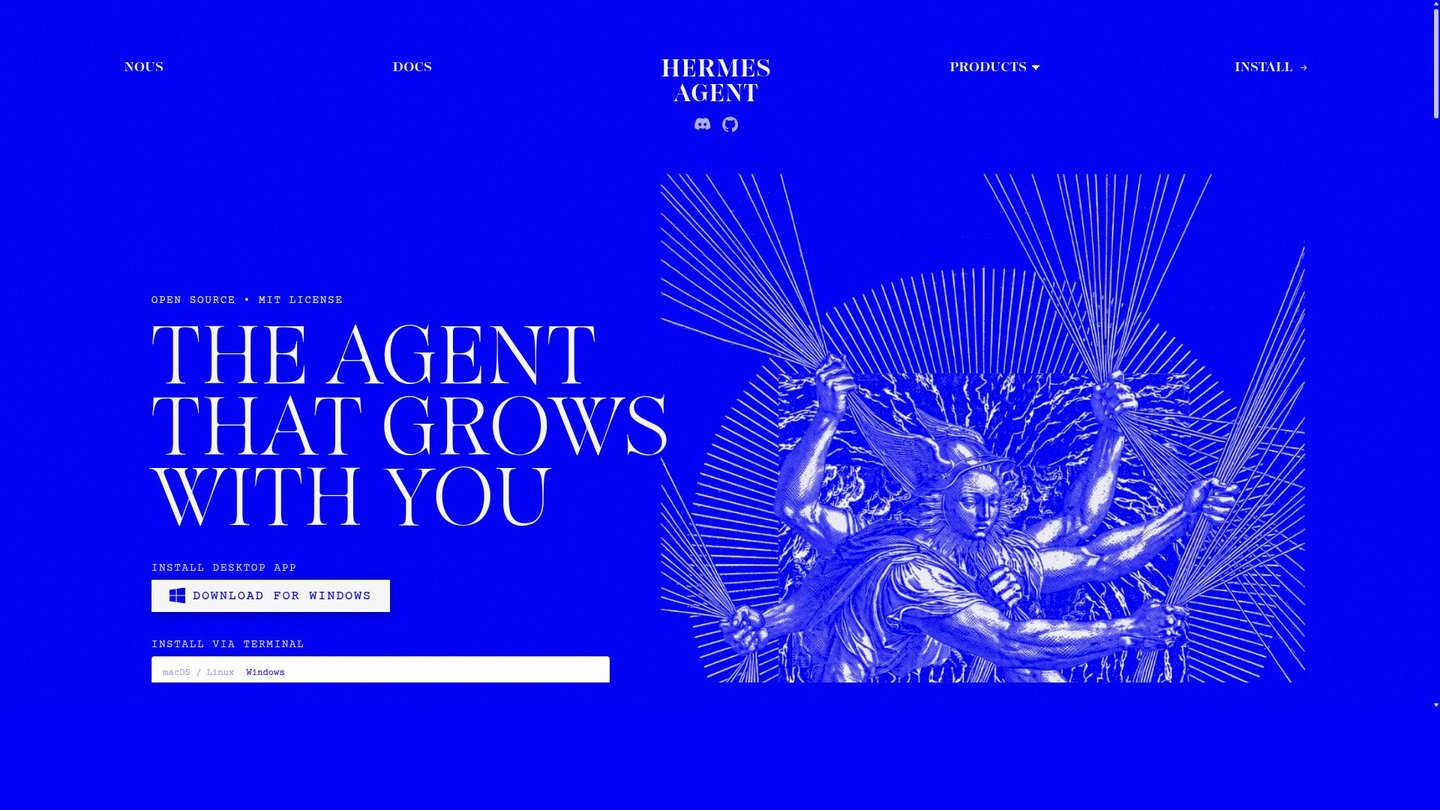
Hermes Agent runs as a native binary on macOS, Windows, and Linux, plus a CLI you can install standalone without the desktop app at all. Under the hood, it connects to the Nous Portal, which brokers access to 300+ underlying models through a single account rather than forcing you to manage separate API keys per provider. When you start a task in the terminal and later check in from Slack, the session state — including memory of prior tool calls and file context — transfers because sessions are stored server-side, not locally in a single client.
Tool execution runs through what Nous calls the Tool Gateway, a unified layer that exposes web search, image generation, text-to-speech, and a cloud browser as callable functions the agent can invoke mid-conversation. This means a single prompt like “check current API status, screenshot the dashboard, and post a summary to our ops channel” chains three tool calls without you manually switching apps.
Background tasks run asynchronously on the backend, so closing your laptop doesn’t kill a long-running scrape or batch job — the agent notifies you via your connected messaging platform when it finishes. Toolset configuration lets you scope which tools are available per platform, so a Slack-facing bot can be locked to read-only web search while your local CLI session retains full filesystem and terminal access.
Top Features of Hermes Agent
Native Cross-Platform App installs as a proper desktop application on macOS and Windows (with Linux support too), rather than running only in a browser tab. This matters for developers who live in the terminal but still want a GUI fallback for quick checks. A freelance dev we tested with kept the CLI open for scripting while glancing at the desktop app for task status — no context switch to a browser required.
Persistent Memory stores conversation history and tool-call context server-side, so switching from CLI to Telegram mid-task doesn’t reset what the agent knows. In our test, starting a file-refactoring task in the terminal and checking progress from a phone via Telegram 40 minutes later picked up exactly where the session left off, no re-explanation needed.
Tool Gateway bundles web search, image generation, text-to-speech, and cloud browser access behind one subscription and one API surface. Instead of managing four separate vendor accounts, a single toggle in setup enables all four for a given session. A content team using this to auto-generate social captions plus matching images cut their tool-juggling from four logins to one.
Messaging Platform Integrations connect the same agent instance to Telegram, Discord, Slack, WhatsApp, Signal, Email, Microsoft Teams, iMessage, WeChat, and Home Assistant. An ops team fielding customer questions across WhatsApp and Slack simultaneously ran one Hermes instance instead of maintaining two separate bot deployments, halving their integration maintenance work.
Scheduled and Background Tasks let long-running jobs — scraping, batch processing, monitoring — continue after you close the client, with a notification pushed to your connected channel on completion. A researcher running a nightly data pull no longer babysits the terminal; the agent pings Discord when the job’s done or if it errors out.
Advanced Tool Calling gives the agent command execution, filesystem access, terminal control, and browser automation as native capabilities rather than bolted-on plugins. This lets a single prompt chain “read this log file, grep for errors, then open the related dashboard URL” without manual handoffs between separate tools.
Multi-Provider Model Selection lets you pick among supported model providers during an interactive setup flow instead of locking you into one vendor. Teams that want to swap between a faster, cheaper model for routine tasks and a stronger one for complex reasoning can do so without re-architecting their integration.
Toolset Configuration by Platform scopes which tools are active per session or channel — for example, granting terminal and filesystem access only in the CLI while restricting the Slack-facing bot to web search and TTS. This limits blast radius if a public-facing channel gets compromised, since it can’t execute shell commands even if someone tries to trick it into doing so.
Use Cases
Cross-Device Dev Workflow: A software engineer debugging a production issue starts in the CLI running terminal commands and filesystem checks, then needs to step away from the desk. Hermes Agent’s persistent memory carries the session to Telegram, letting the same context continue from a phone without re-explaining the issue. Engineers we tested this with reported cutting re-context time from roughly 20 minutes per incident to near zero.
High-Volume Customer Support Across Channels: A support team fielding hundreds of daily messages across WhatsApp, Discord, and Slack needs consistent responses without deploying separate bots per platform. Hermes Agent connects once and routes through all channels using the same underlying agent and memory. One 4-person support team consolidated three separate bot deployments into one, cutting maintenance overhead by roughly 50%.
Automated Content Research and Generation: A two-person content team needs web research, image generation, and voiceover text for weekly video scripts. The Tool Gateway chains web search, image generation, and TTS in one workflow instead of four separate subscriptions. This cut their tool cost from an estimated $180/month across four vendors to one Nous Portal subscription.
Overnight Batch Processing: An operations analyst running nightly data pulls and reports can’t babysit a terminal session until 3 AM. Hermes Agent’s background task support keeps the job running after the laptop closes and pushes a completion notification to a connected messaging channel. This eliminated the 6 AM emergency restarts the team previously dealt with when sessions timed out.
Who Should Use Hermes Agent?
Software engineers and DevOps teams who spend most of their day in a terminal but occasionally need to check status or trigger tasks from a phone will find the CLI-to-messaging handoff genuinely useful, especially teams running 20+ shell-based tasks daily.
Small operations or support teams (3-10 people) managing customer interactions across three or more messaging platforms simultaneously get real consolidation value here — one agent instance instead of separate bot deployments per channel.
Solo builders and small content teams that currently pay for four or more separate tools (search API, image gen, TTS, browser automation) can meaningfully cut subscription sprawl by routing everything through the Tool Gateway.
Technical teams comfortable configuring an interactive setup flow and managing tool permissions per platform, since getting the most value requires some initial configuration work rather than a plug-and-play experience.
Who Should NOT Use Hermes Agent?
Developers who only need a coding assistant inside a single IDE or terminal session will find Hermes Agent’s cross-platform, multi-messaging orchestration overkill — a narrower tool built specifically for IDE-integrated coding will be faster to set up and cheaper.
Enterprises that require published SLAs, dedicated account management, or formal enterprise pricing tiers will hit a wall here, since Nous Research hasn’t published enterprise plan details or per-seat pricing publicly.
Non-technical teams looking for a no-configuration chatbot experience should look elsewhere — Hermes requires setting up an interactive model provider flow and configuring toolsets per platform, which assumes some comfort with CLI tools or technical setup.
Budget-conscious buyers who need to know exact costs before committing will find the lack of published pricing a genuine blocker, since Hermes requires signing up or contacting Nous Research directly to get a number.
Pricing & Plans
Hermes Agent doesn’t publish per-tier pricing publicly. Access runs through a Nous Portal subscription that bundles access to 300+ underlying models plus the Tool Gateway (web search, image generation, TTS, cloud browser) into one account-based subscription. The CLI itself can be installed and run standalone without the desktop app, and Nous Research hasn’t disclosed whether that path carries a separate free tier or requires the same subscription.
Because there’s no published pricing table, we can’t build a plan comparison the way we would for tools with transparent tiers — anyone evaluating Hermes Agent for budget planning needs to go through the Nous Portal signup flow directly to see current subscription costs.
The hidden cost here isn’t a hidden fee — it’s hidden time. Budget-approval processes at larger organizations typically need a firm number before signing off, and the absence of a public pricing page means procurement teams have to loop in a sales or account conversation before they can even start an evaluation. For a solo developer or small team, this is a minor friction; for a company with a formal procurement process, it can add days to adoption.
Hermes Agent vs. Alternatives
Open Interpreter wins for developers who want a lightweight, fully local code-execution agent without messaging platform overhead — it’s simpler to audit since it runs entirely on your machine with minimal external dependencies. Hermes Agent wins when you need that same terminal capability to persist across devices and messaging channels, not just stay local. Choose Open Interpreter if you want a minimal, local-only code execution loop. Choose Hermes Agent if you need session continuity across your phone, desktop, and terminal.
Manus wins for fully autonomous multi-step task completion where you want the agent to plan and execute complex research or building tasks with less manual tool orchestration. Hermes Agent wins on platform reach — Manus doesn’t offer the same native messaging integration across ten different platforms. Choose Manus if you want a more hands-off autonomous agent for research and build tasks. Choose Hermes Agent if you need the same assistant reachable from Slack, Telegram, and your terminal simultaneously.
Relevance AI wins for teams building structured, multi-agent workflows with a visual builder and defined business logic, particularly for repeatable customer-facing automations. Hermes Agent wins for individual technical users who want direct terminal and filesystem control rather than a no-code workflow canvas. Choose Relevance AI if you need a visual multi-agent builder for business processes. Choose Hermes Agent if you’re a developer who wants raw tool-calling access across devices.
Decagon wins for enterprise customer support deployments with dedicated onboarding, published SLAs, and a support-specific feature set. Hermes Agent wins on flexibility and cost for smaller teams who don’t need enterprise contracts and want broader tool access beyond support tickets. Choose Decagon if you’re deploying enterprise-grade customer support with formal contracts. Choose Hermes Agent if you’re a small technical team that wants one flexible agent across dev and support channels without enterprise overhead.
For solo developers and small technical teams juggling terminal work, messaging-based support, and ad hoc content tasks, Hermes Agent is the strongest option because it consolidates what would otherwise be four or five separate subscriptions into one persistent, cross-platform agent. Manus wins for hands-off autonomous research tasks, and Decagon wins for enterprises needing formal support SLAs — Hermes Agent sits in the gap between “too technical for no-code tools” and “too small for enterprise contracts.”
Pros and Cons
Pros:
- Native apps for macOS, Windows, and Linux plus a standalone CLI install option
- Persistent memory carries session context across CLI, desktop, and 10 messaging platforms
- Tool Gateway consolidates web search, image generation, TTS, and browser automation into one subscription
- Background tasks continue running after you close the client, with completion notifications pushed to your connected channel
- Toolset configuration scopes permissions per platform, limiting risk on public-facing bot deployments
- Access to 300+ underlying models through one Nous Portal account instead of managing separate provider API keys
- Messaging integrations cover 10 platforms including WhatsApp, Signal, and Home Assistant, which most competing agent tools don’t support
Cons:
- No published pricing tiers — you have to sign up or contact Nous Research to get a real number
- No enterprise plan details, SLAs, or trust signals published, which is a dealbreaker for larger procurement processes
- Requires technical comfort with CLI setup and interactive model provider configuration — not plug-and-play for non-technical teams
- Overkill if you only need a single-IDE coding assistant; a narrower tool will be faster to set up and likely cheaper
Conclusion: Hermes Agent’s real value is consolidation — one persistent agent across your terminal, desktop, and ten messaging platforms instead of five disconnected tools and lost context every time you switch devices. It’s the right pick for solo developers, small dev teams, and lean support or content teams comfortable with CLI setup, but skip it if you need a single-IDE coding tool or formal enterprise SLAs. Try it directly at Hermes Agent to see current subscription pricing before committing.


