
Scholarcy: Fast AI Research Summaries
Scholarcy speeds literature review by turning long papers into concise, structured summaries; for example, a PhD student can upload ten PDFs and get key findings, methods, and extracted tables in minutes. As a result, time spent skimming drops dramatically and researchers can focus on analysis rather than manual extraction.
About Scholarcy
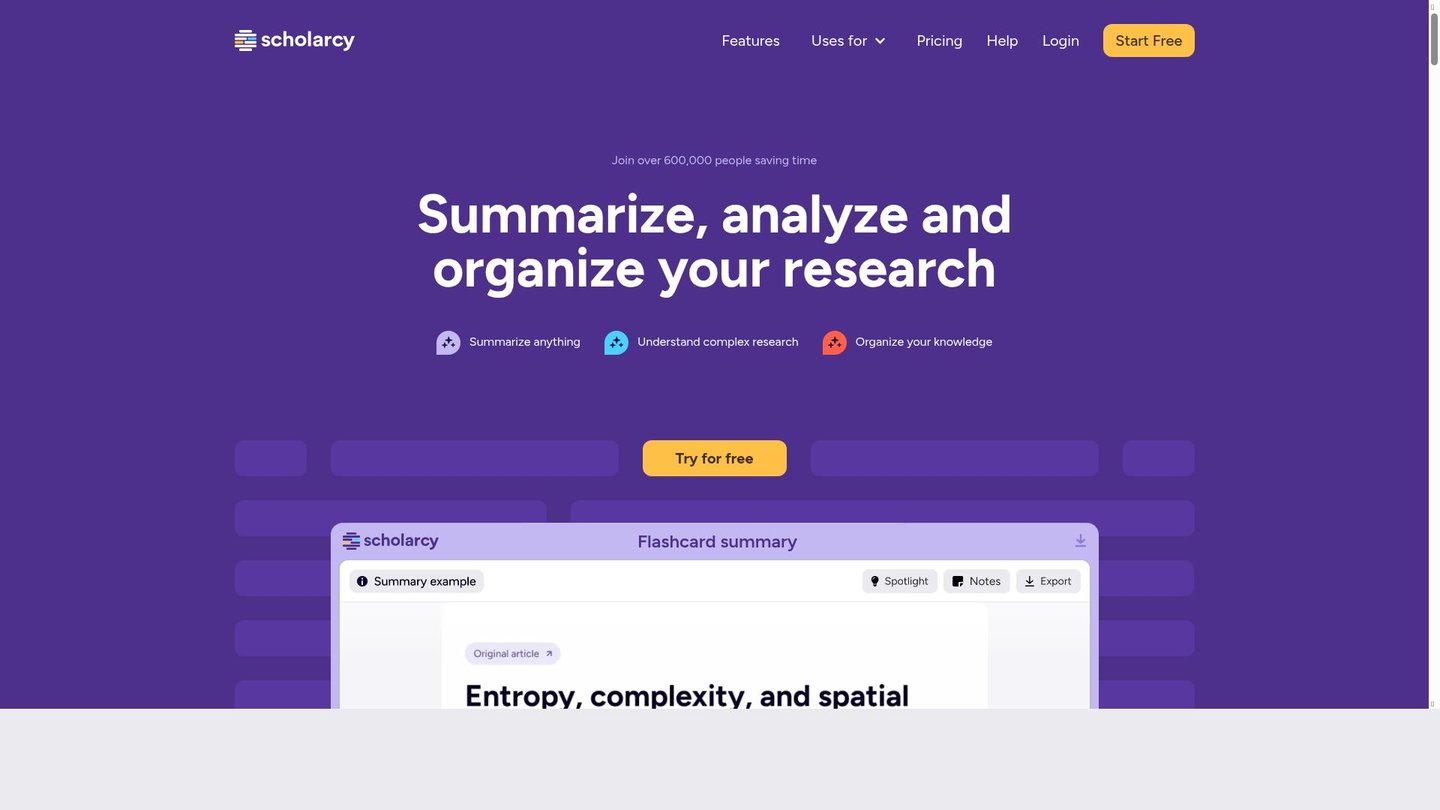
First, Scholarcy is an AI-driven research assistant that summarizes scholarly articles, reports, and book chapters into interactive summary flashcards. It solves the problem of information overload by extracting research questions, methods, results, and references so users grasp the essentials quickly. Researchers, students, librarians, and policy analysts use Scholarcy to screen literature and prepare literature reviews without reading every paper in full.
Next, Scholarcy works by applying natural language processing and machine learning to analyze uploaded PDFs, Word files, URLs, or pasted text. It highlights key passages with a robo-highlighter, extracts tables and figures into usable formats, and builds comparison views across multiple papers. For example, a university librarian can batch-process departmental publications, while a marketer conducting competitive research can extract data from industry reports. The platform integrates with reference managers and note apps, and supports API access for institutional workflows, making it useful for educators, grant writers, and busy professionals.
Features of Scholarcy
Therefore, here are the main features that help speed research and content workflows.
- Automatic Summaries: Produces concise, structured summaries that save reading time and support rapid literature screening, aiding AI content creation and research workflows.
- Robo-Highlighter: Identifies critical passages automatically so users quickly spot contributions and claims relevant to academic writing and digital storytelling toolkits.
- Table & Figure Extraction: Pulls tables and figures into spreadsheets for easy analysis, helpful for data-driven reports and AI video maker scripts that reference study results.
- Cross-Paper Comparison: Compares findings across multiple papers to reveal trends, contradictions, and gaps for literature reviews and synthesis projects.
- Reference & Citation Export: Generates ready-to-use citation lists compatible with reference managers, streamlining academic publishing and content repurposing.
- Interactive Flashcards: Converts key points into reviewable flashcards to support study, teaching, and quick briefings for teams.
Additionally, Scholarcy offers integrations and flexible access for teams and individuals. For example, it provides API access for institutional scale and browser extension support for quick on-page summaries. Furthermore, there are free credits or a free tier to test basic functionality and paid pricing tiers for heavier use. The platform also supports collaboration tools and integrates with popular note-taking and reference apps, while mobile-friendly interfaces let users review summaries on the go.
Finally, Scholarcy streamlines literature review with focused AI summarization and research-quality indicators, making scholarly content faster to scan and easier to reuse; as a secondary benefit, this digital research tool improves efficiency for students, academics, and professionals who must synthesize many documents quickly.


